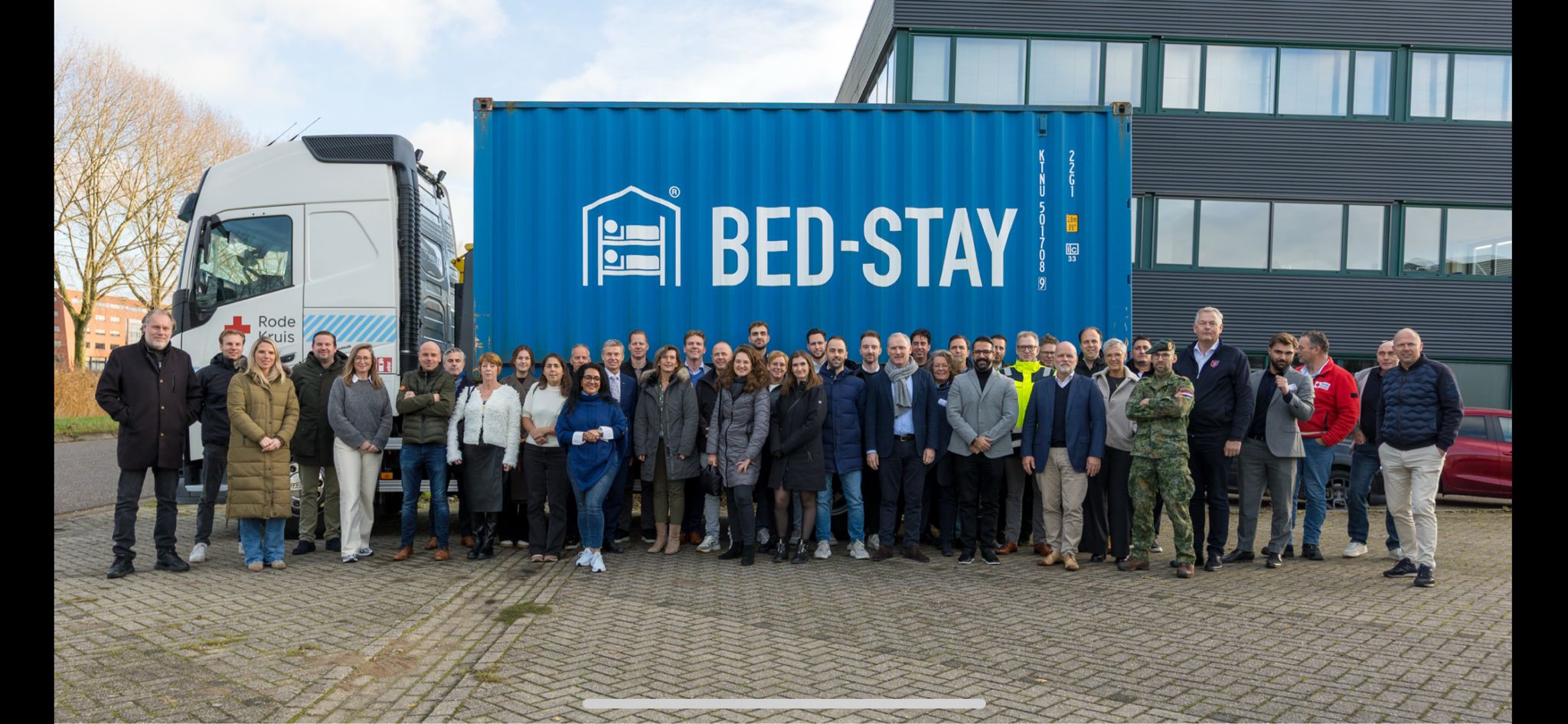
We don't often talk about the uncomfortable side of what we do. But at our resilience event, organised together with the Red Cross, that's exactly what we did.
The room was full of people who take this subject seriously: crisis managers, policymakers, military advisors, safety region representatives, and private partners. People who spend their working lives preparing for the moments no one wants to think about. And together, we asked a question that most organisations quietly avoid: what actually happens when a real crisis hits?
The answer wasn't reassuring. But the conversation was exactly what needed to happen.
The honest problem with crisis capacity
Our founder Peter Vogel put it plainly to the room.
"During a crisis, we get flooded with requests. Suddenly everyone needs emergency accommodation at the same time. But if we haven't made agreements in advance, our beds go to the highest bidder. That doesn't feel right. It means the most vulnerable people might not get helped. And on top of that, we end up looking like opportunists."
It's something we think about a lot. We build sleeping systems for people in difficult circumstances. People who have lost their home, who are working 14-hour shifts in a field, who are sheltering somewhere unfamiliar. The last thing we want is for our capacity to end up where the money is rather than where the need is.
Jan Pol from the Infra Capacity Alliance made the point even sharper: the allocation of scarce resources should never be a commercial decision. The most vulnerable people in society cannot afford to lose out because someone else offered more.
That's the core reason we work with ICA. By connecting companies and government bodies before a disaster strikes, the goal is simple: when the moment comes, the right materials reach the right places.
What preparation actually looks like
Stef Hanken, crisis manager at Veiligheidsregio Utrecht, shared how his region has started putting this into practice. They've signed an agreement with ICA that guarantees emergency generators and fuel to fire stations during a crisis. Not a large contract yet, but a meaningful one.
"It's not just about the contract," he said. "It's about the mindset."
Marie-Louise van Schaijk, who oversees risk and crisis management on behalf of all Dutch safety regions, was equally direct about why this matters. The lessons from the COVID-19 era, and the face mask chaos that followed, need to stay with us. In a crisis, every authority reaches for the same products at the same moment. The organisations that have already made agreements, already tested the process, already built the relationships, are the ones who can actually act.
Ruud Moeskops from the Army's Engineering Knowledge Centre added something that brought the stakes into sharp focus. "When an attack comes, everything hits at once. Don't call us, because we'll be looking east. Dutch society needs to keep functioning."
That's a sobering reminder of what resilience actually requires. Not a plan in a binder. Not good intentions. Actual capacity, agreed in advance, ready to go.
Our answer: Secure
One of the things we talked about that day was our Secure model, and why we built it.
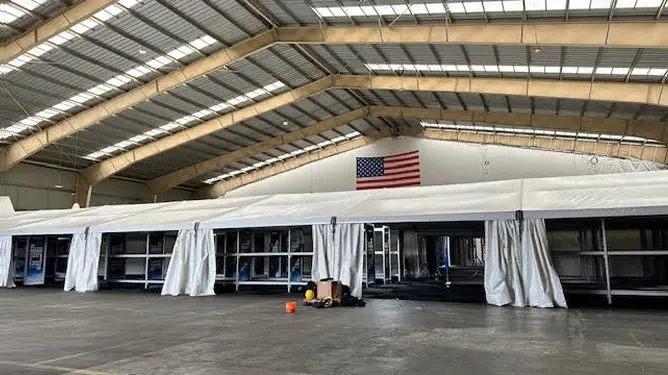
The problem with emergency capacity is that nobody wants to buy it until they need it. And by the time they need it, it's too late. Our Secure model is designed to solve exactly that. Organisations reserve sleeping capacity in advance at a fixed monthly rate. The systems are stored at a strategic location within four hours' drive, ready to deploy at short notice, without the upfront purchase cost, without storage headaches, without uncertainty.
It's preparation without the price tag that makes most people hesitate.
What it feels like when you're not prepared
The most powerful moment of the day came from Edward Verweij, who shared his experience of hurricane Harvey in Texas in August 2017.
He had watched the storm approaching for days. The power was already gone. Forty degrees Celsius, no air conditioning, no internet. At some point, he told us, you just know. He packed his family into the car and drove north.
When the storm passed, they went back. And that's when it really started.
No clean water from the taps. Empty and flooded supermarkets. His damaged belongings sitting on the street for two months because waste collectors had no capacity to pick them up. He parked a camper in front of his own house and lived there with his family while the building was repaired. Eight months passed before he could move back in.
Eight months. Not because help didn't exist. Because the system wasn't ready.
That story stayed with everyone in the room. Because it's not about a faraway disaster. It's about what happens to ordinary people when the preparation wasn't done.
Why the Red Cross matters to us
We're proud of our partnership with the Red Cross, and this event deepened that. Director Harm Goossens spoke about the importance of clear roles: the Red Cross returns to its core task of emergency relief, and it does that effectively only when it works with reliable partners who know their own role.
That's a principle we recognise. We're not a humanitarian organisation. We make sleeping systems. But we make them for exactly the moments that humanitarian organisations are responding to. Getting that right, being a partner that delivers when it matters, is something we take seriously.
What we take away from this day
Marie-Louise van Schaijk said something at the end of the day that has stayed with us.
"On bad days, I get frustrated by how slowly this is going. I long for the moment when we stop talking and start doing."
We feel that too. The conversations are happening. The political will is growing. But conversations don't house people. Agreements do.
Our role is to make sure that when the call comes, the beds are there. Not because someone just placed an order. Because someone prepared.
If your organisation works in emergency shelter, crisis management, or safety region planning and you want to talk about what guaranteed capacity looks like in practice, we'd be glad to have that conversation.
Curious what Bed-Stay can do for you? We have put together a complete information package, covering all configurations and specifications, with a clear explanation of everything the system can do.